
This week I started refining the sound design and sound editing in my film. For me, sound is more important for my immersion in a movie than the visuals. Think about it; you watch two different movies,one with bad visuals but great sound and one with great visuals but nearly inaudible or static sound. There are a lot of movies out there that fall into the first category: Pi, 28 Days Later, and Primer. (All of these movies don’t look good in a traditional sense, although they find ways to make that work for them while still implementing cinematic visuals.) Most student films fall into the second category.
I think a lot of sound editing is treated like film editing. Many films prioritize invisible cuts in the editing process and unfortunately sound design is often disguised too. The audience is never made aware of the sounds they are hearing; perhaps this stems from a fear of sounding too “cartoon-y”. These films only implement sound when necessary, like adding the noise of something being picked up and put down to maintain realism. But I think sounds are a fantastic way to convey mood. Over-exaggerated or unique noises can convey a character’s thoughts or change the emotion of a scene. My biggest influence here is Darren Aronofsky. His sounds give scenes such amazing tactility and energy! I can feel the weight of objects by hearing them in a new way because of his dramatization of the noise. And it’s inspiring the way he goes all in even in his screenplay for Requiem for a Dream.
Marion throws some cold water on her face. She looks at her naked body in the mirror. She feels lifeless, drab and dead.
QUICK CUTS: Tinfoil crinkles, powder sprinkles, lighter flicks, smoke drifts, straw sucks, a pleasure sigh…
Anyways, just watch this great video from Kogonada and you’ll know exactly what I’m talking about.
In O’ Speak of Your Fleeting, Prolonged Decay!, I worked with my sound editor to give texture to each scene. I was inspired by Aronofsky and also ASMR videos. (To my surprise, I found out I wasn’t the only one.) I wanted to create intimacy in some scenes and in others I wanted to distance the audience in Brecht-ian manner. Here’s an excerpt:
SFX: Factory sounds slow but grow in volume
The container falls slowly to the ground. It crashes.Freeze frame.
Closer. Closer. Close enough to see where the cracks have begun to spread, albeit blurry.SFX: Slow gas leak - Inhale - Coughing, coughing, coughing
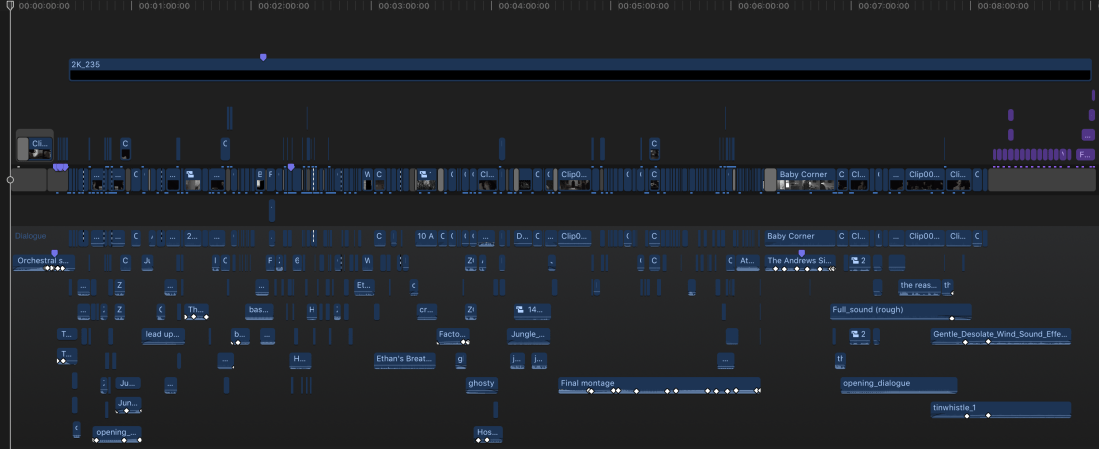
A great deal of my scripted sound design didn’t make it in, but what did makes me really proud. And today I was tasked with a scene that felt empty. A man is watching his wife cook only to turn and see something on fire. Right before he turns, I slowly faded in the noise of a bonfire that grew louder as he turned. But I couldn’t connect to the reality of the film in the way I wanted. The best I can describe it is by saying the scene had a texture like polished wood, but I needed a bumpiness to give me something to hold onto. I decided to focus on the eggs the wife is cooking in a pan. I found a great noise that worked well with the imagery but still stood out. And then I had an idea: why not fade the two noises together? Now the frying noise introduces and then disappears into the bonfire noise which fits the dreaminess of the scene perfectly. Here’s a picture of my timeline to make up for the wordiness.
Other than that, I changed the font on my end credits. Helvetica is boring so I went for something more aesthetically interesting:
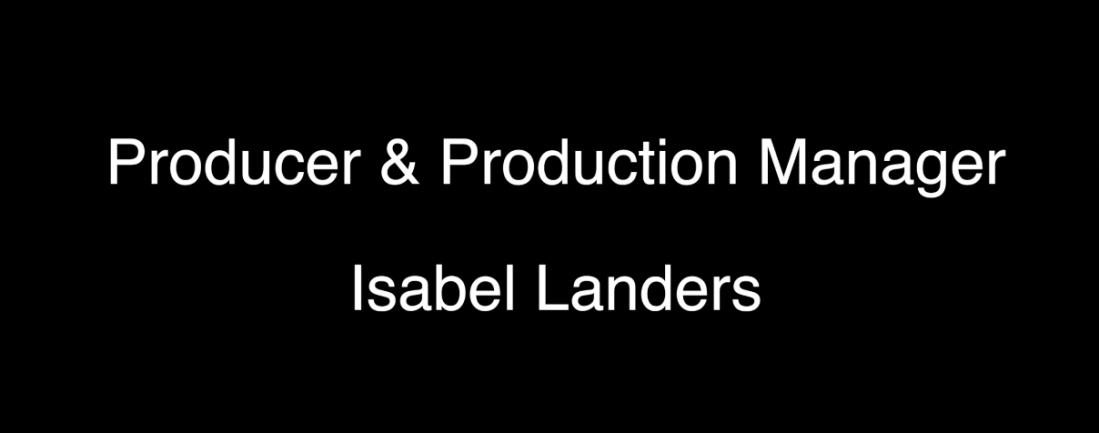
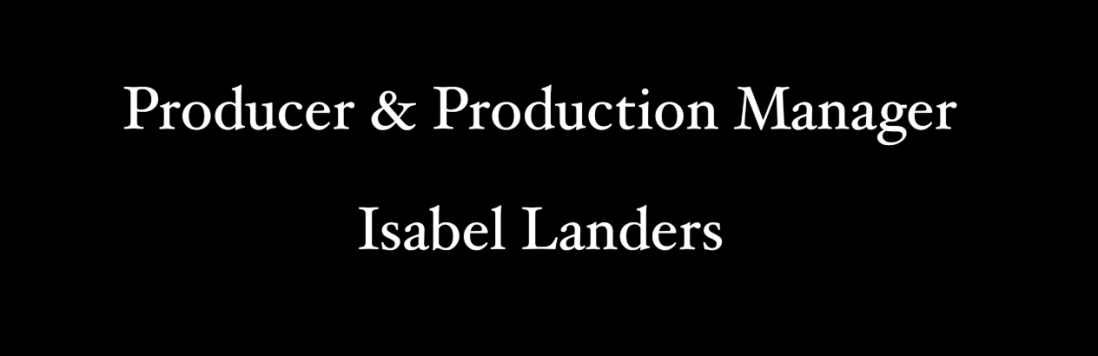
I think that looks better and I’m sure Isabel does too.
Next week, I need to fix some actual problems which will require more elbow grease than I currently have. I need to get some V.O. for characters who are supposed to be American military generals but sound more like college students. Oh well.
In the meantime, I’ll be re-watching Paddington and I hope you are too.

So Long,
Austin

 A Bigger Boat